Saint Alphonsus Liguori:
Founder of the Redemptorists
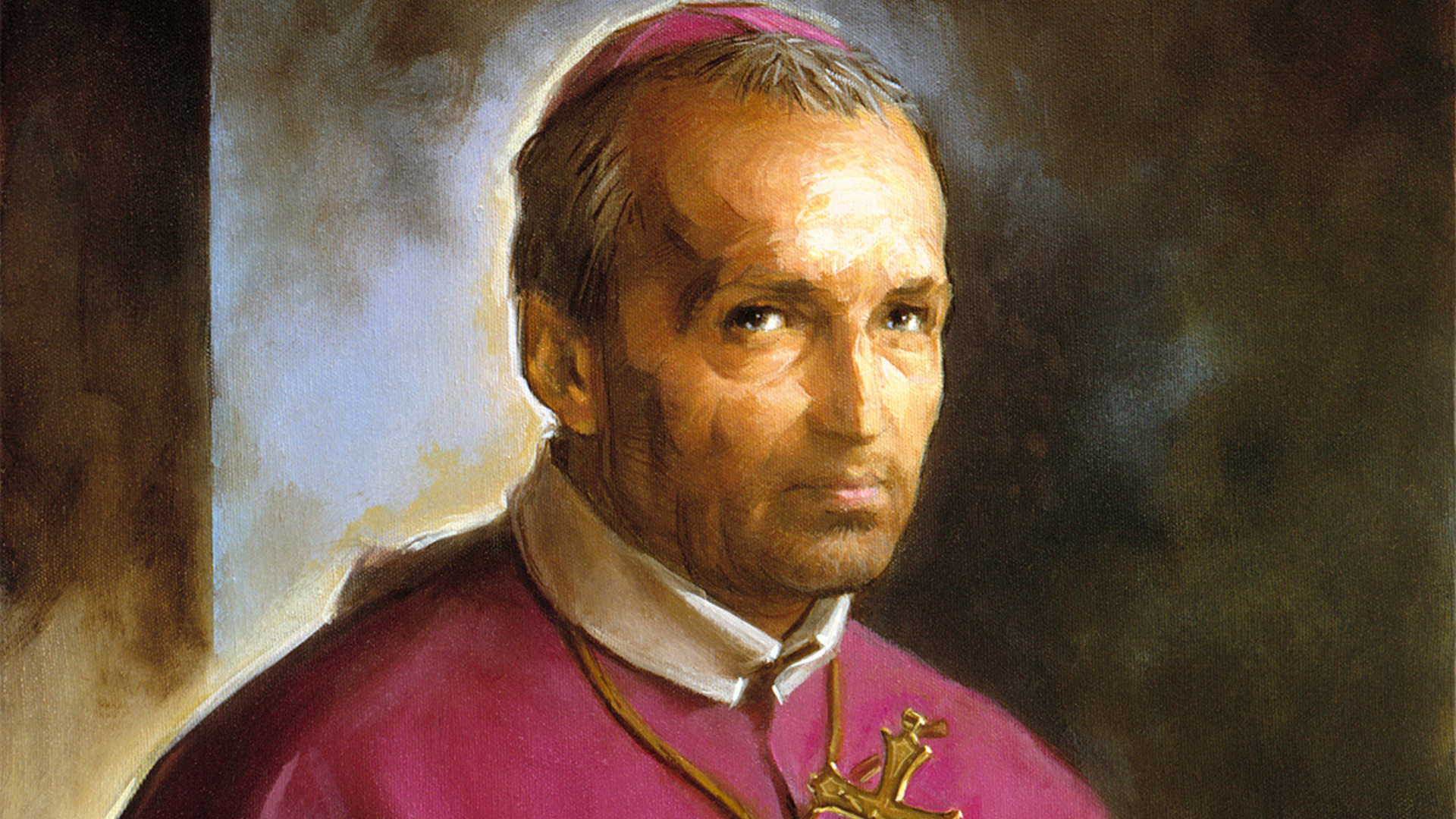
Saint Alphonsus Maria de Liguori (1696–1787) lived a life shaped by intellect, compassion, and an unshakable commitment to the most neglected in society. Though history remembers him as a saint, bishop, writer, and Doctor of the Church, at his heart, Alphonsus was a servant—deeply moved by the suffering of the poor and guided by a relentless pursuit of God.
Born near Naples into a noble family, Alphonsus was a child prodigy. By just 16, he had completed doctorates in both civil and canon law. For several years, he practiced as a lawyer and earned widespread respect. But disillusionment soon followed. Corruption in the legal system—and the bitter taste of a lost case—led him to a spiritual crisis. Feeling called to something higher, Alphonsus left the courtroom behind and entered the priesthood, ordained in the year 1726.
In his early years as a priest, Alphonsus poured himself into ministry with such intensity that it nearly broke his health. Wherever he went, his attention was drawn to those most in need—the forgotten and the spiritually hungry. But it wasn’t until 1732 that Alphonsus took a definitive step away from city life and popularity, choosing instead to walk alongside the poor in a deeper way. Giving up the comforts of familiarity, he founded a new religious community—the Congregation of the Most Holy Redeemer, known today as the Redemptorists.
The Redemptorists brought spiritual renewal to the countryside. Priests and brothers traveled from place to place, offering preaching, sacraments, and heartfelt devotion. But they didn’t just pass through—they stayed. In this way, Alphonsus and his companions gave the poor something rare: the assurance that they would not be abandoned.
Alphonsus had a special connection to the people not just through faith but through music. A gifted composer and musician, he often wrote hymns that reflected the lives and hopes of the people in the communities.
He was also a talented painter. At 23, he created his own image of Christ on the Cross—a deeply emotional piece that captured suffering as an act of love. He also painted the Virgin Mary with soft, tender features, a vision of peace that remained close to his heart throughout his life.
Much of Alphonsus’s spiritual depth came from his profound devotion to Mary. In times of emotional or spiritual turmoil, he turned to her like a child calling out to a mother. This Marian love wasn’t just personal—it shaped his preaching, writing, and prayer.

A prolific writer, Alphonsus also made theology accessible. He believed that spiritual truths should be understandable to ordinary people. His works were not for scholars alone but for anyone trying to live a good and faithful life. His most influential book, Moral Theology, was written to help people— countering the harsh and rigid teachings that dominated in his time. Among his over 100 works are beloved titles such as Visits to the Blessed Sacrament, The Practice of the Love of Jesus Christ, and The Glories of Mary.
Alphonsus transformed preaching and confession in the Church. He replaced dramatic but empty sermons with simple, heartfelt messages. In the confessional, he chose to offer understanding and kindness. For 26 years, he traveled extensively across the Kingdom of Naples, bringing these reforms to life through popular missions.
At 66, he was appointed bishop—a role he initially tried to decline. Yet, once he accepted, he worked tirelessly to renew his diocese with the same compassion and dedication he had shown as a priest.
His later years were marked by great suffering. At 71, he developed painful rheumatism that left his body bent. And in the last 18 months of his life, he experienced a deep spiritual trial—battling doubts and fears that he had not done enough for God whom he greatly loved. But he was not left alone in his pain – his confreres were with him, to pray for him during this difficult time of his life.
On the evening of July 31, 1787, Alphonsus requested a picture of the Virgin Mary and was given one, placed in his hands. The next day, noon time of August 1, he passed into eternal life, at the age of 91.
Alphonsus was canonized in 1839, and later on declared a Doctor of the Church in 1871. He was named the patron of confessors and moral theologians in 1950. To this day, the Church holds his teachings in such regard that his moral guidance remains officially recognized and trusted.
Alphonsian Spirituality:
Encountering the Redeemer through
the Crib, the Cross, the Altar, and Mary
At the very heart of the spirituality of Saint Alphonsus Liguori lies one profound truth: we are deeply, endlessly loved by God.
This isn’t just a theological concept or a comforting phrase—it was the lived experience of Alphonsus himself. He was overwhelmed by the depth of God’s love, and he saw this love most clearly and completely revealed in the person of Jesus Christ. For Alphonsus, Jesus was not only the Savior but the living, breathing, suffering, and risen proof that God’s love is all over us.
Jesus: God’s Love in Flesh and Blood
Saint Alphonsus’ spirituality is grounded in the redeeming love of Jesus—God who became one of us, who walked in our dust, carried our pain, and gave everything to bring us home. Jesus, our Redeemer, is the sign that God does not love us from a distance but from within our very lives. He shared our human condition, suffered, died, rose again, and remains truly present among us.
This spirituality isn’t abstract or lofty. It is tangible and accessible, drawn from the everyday life and love of Jesus. Over time, Alphonsian spirituality has come to be beautifully expressed in four sacred signs:
The Crib, the Cross, the Altar, and Mary
These four symbols are more than religious imagery. They are windows into the mystery of God’s redeeming love. Together, they speak of one great act of divine mercy, unfolding through time and space, through birth, suffering, sacrifice, and compassion.
The Crib – God With Us
In the Incarnation, Jesus—God’s own Son—takes on flesh. The Crib reminds us that love led God to become one of us, to enter our vulnerability, and to dwell among us in complete humility.
The Cross – Love That Embraces All
On the Cross, Jesus emptied Himself entirely. He did not run from suffering or reject the pain of the world. He embraced it—redeemed it—by becoming a servant to all, even unto death. The Cross is where love held nothing back.
The Altar – Love That Lives Today
The Eucharist is where the love of Jesus becomes present again and again. At the Altar, the sacrifice of Christ continues to nourish and strengthen us. The same love that was born in Bethlehem and poured out on Calvary now meets us in bread and wine.
Mary – A Mother’s Love
Even in His final moments, Jesus gave us His most tender gift: His own mother. Mary stands beside us, just as she stood beneath the Cross, offering us her quiet strength and unwavering compassion. Through her intercession, we continue to receive the consoling presence of the Redeemer.
One Great Event: Love in Action
For Saint Alphonsus, the Crib, the Cross, the Altar, and Mary are not separate devotions. They are threads of one continuous story—God’s love made visible in Jesus. This love begins in the manger, is poured out on the Cross, is shared daily in the Eucharist, and is made gentle and personal through the presence of Mary.
His spirituality is not a complicated system. It is simple, profound, and deeply human. It invites us to see our own lives—our joys, sufferings, relationships, and daily choices—as places where God’s love is still being revealed.
To walk in the spirituality of Saint Alphonsus is to be drawn ever deeper into the love of the Redeemer. It is to know, with heart and soul, that we are loved in Jesus—now and forever.